


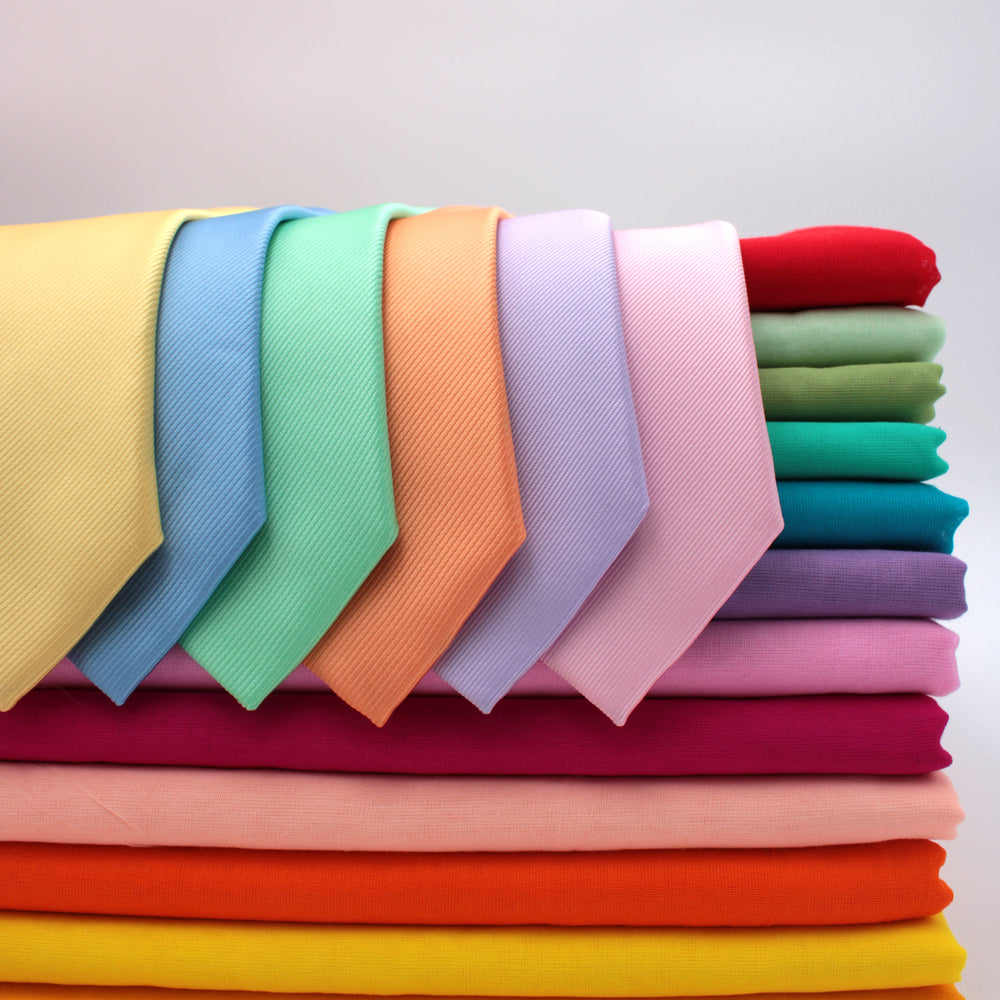
The History of Turban Fabric in Punjab
From Handspun Cotton to the Voile We Wear Today
By Meri Dastar • meridastar.in • Heritage Series
The Cloth Before the Crown
People talk constantly about what the turban means. Who tied it, why it was given, what it represents in faith and history and identity. All of that matters enormously. But behind the turban — behind the symbol — there is the cloth itself. And the cloth has its own story.
The fabrics used for turbans in Punjab did not arrive ready-made. They grew from centuries of cotton cultivation, from the skill of weavers who worked on handlooms in small workshops and village courtyards, from trade routes that carried techniques and materials across entire continents. Understanding the fabric is understanding the ground beneath the symbol — and that ground runs very deep.
The Ancient Foundation — Cotton and the Punjab
Before turbans as we know them existed
Cotton has been cultivated in the Indian subcontinent for thousands of years. Archaeological findings link cotton textile production to the Indus Valley Civilisation — one of the world's earliest organised civilisations, which flourished in what is now northern India and Pakistan, including the Punjab region.
The first cotton textiles produced in this part of the world were plain-woven, hand-spun fabrics — crude by later standards but foundational to everything that followed. Cotton was used for clothing, shawls, and — from the very beginning — for head coverings. The turban, or Pagri, as a concept predates Sikhism by many centuries. In ancient South Asia, the head covering was a marker of status, dignity, and identity across multiple cultures and religions long before Guru Nanak Dev Ji was born.
What cotton made possible in Punjab was a head covering fabric that breathed in the punishing summer heat of the subcontinent while still offering protection from the sun. This practical genius of cotton — light, breathable, washable, durable — is why it remained the dominant material for turban fabric through every era that followed.
The Mughal Era — Refinement and the Rise of Mulmul
The Mughal period (roughly the 16th to 18th centuries) brought extraordinary refinement to Indian textile arts. The Mughal courts were among the most sophisticated patrons of textile production in the world, and their influence on weaving techniques spread across the subcontinent.
It was during the Mughal period that Mulmul — the fine muslin that is the ancestor of today's Mal Mal — was elevated to an art form. Weavers in Bengal became famous for producing Mulmul of almost impossibly fine quality — so light and transparent that it was said the cloth could pass through a ring. This material was reserved almost exclusively for royalty.
In Punjab, the Mughal period brought an increase in the sophistication of cotton weaving. The turban became a critical marker of social status under Mughal rule — only men of the noble and upper classes were permitted to wear turbans in public. This exclusion was one of the conditions that Guru Gobind Singh Ji directly and deliberately overturned when he founded the Khalsa in 1699 — giving the turban to every Sikh equally.
The act of giving the turban to every Sikh at Vaisakhi 1699 was not merely symbolic. It was a direct political statement against the Mughal caste and class system. When Guru Gobind Singh Ji said every Sikh would wear a Dastar, he was taking the crown from the heads of kings and placing it on the head of every person regardless of birth.
The Weaving Tradition of Punjab
Khes, Khaddar, and handloom cotton
Punjab had its own ancient and sophisticated handloom weaving tradition long before the Mughal period. Ludhiana and Amritsar were significant centres of cotton and silk textile production. The fabrics of Punjab were practical, durable, and deeply woven into the daily life of its people.
The traditional handloom cotton of Punjab — particularly Khaddar (a coarse handspun cotton similar to what Gandhi later made famous as Khadi) and Khes (a thicker woven fabric) — formed the backbone of everyday textile production for centuries. These were the fabrics that Sikh farmers, soldiers, and traders would have worn, wrapped, and tied.
For turbans specifically, the preference in Punjab evolved towards lighter-weight plain cottons as the Dastar style became more defined in the Sikh tradition. A lighter fabric meant a longer length could be wound without the turban becoming unbearably heavy. A finer weave meant a smoother, neater appearance. Both of these needs drove the gradual move towards finer cotton weaves — towards what would eventually become Voile.
The 19th and 20th Centuries — Industrialisation and Voile
The 19th century brought industrialisation to textile production across India. Powerloom technology — first introduced by colonial-era mills and later adopted by Indian manufacturers — transformed what could be made, how quickly, and at what cost.
This is the period when Voile enters the story. Voile is a lightweight, sheer plain-weave fabric made from tightly twisted yarns. The word itself comes from French — it means veil. The fabric was originally produced in France and became enormously popular in Europe for summer clothing and light furnishings.
As the Indian textile industry modernised and began producing finer cotton weaves at scale, Voile became available to Indian consumers and quickly found its natural home as turban fabric. It was lighter than traditional Khaddar or heavier cottons, had a smoother surface finish, held its shape well when wrapped, and was available in a wide range of colours as industrial dyeing improved.
By the mid-20th century, Voile had become the dominant turban fabric across Punjab and in Sikh communities worldwide. Full Voile and Rubia Voile (a thicker, structured version) became the standards that Sikh turban-wearers organised their fabric preferences around.
Mal Mal / Mulmul — The Ancient Fabric That Survived
While Voile rose to dominance for everyday turbans, Mulmul — now commonly called Mal Mal — retained its specific and important place in Sikh turban culture. This ancient fabric, the descendant of the fine muslin that Mughal emperors prized, survived into the modern era because it does something no other fabric can match: it allows the building of the Dumala.
The Dumala — the high-domed turban of the Nihang and Akali Sikhs — requires many layers of fabric wound over each other to build its characteristic height and structure. For this to work, the fabric must be extraordinarily light, soft, and thin — so that many layers can be wound without making the weight unbearable. Mal Mal F74 is that fabric. Its 2x2 high-twisted yarn construction makes it the thinnest turban fabric available while retaining the strength needed to hold its shape.
The survival of Mal Mal in Sikh turban culture is a direct line from the ancient handwoven muslin of the Mughal era to the fabric wound by Nihang Sikhs at every Gurpurab and Nagar Kirtan today. The same principle — finest cotton, most delicate weave — still serves the same purpose: to honour the head with cloth that is worthy of what it covers.
Today — AZO-Free Cotton and the Modern Standard
The 21st century has brought a new development in turban fabric: the move towards AZO-free, colour-fast cotton. This matters for two reasons — health and quality.
AZO dyes are a class of synthetic dyes that have been linked to skin irritation and, in some forms, to more serious health concerns with prolonged contact. Premium turban fabric manufacturers — including the mills that supply Meri Dastar — have moved to AZO-free dye processes, ensuring that the fabric that rests against your head throughout the day contains no harmful chemicals.
Colour fastness — the ability of the dye to remain stable through repeated washing and wear — is the second major advancement. Earlier natural and early synthetic dyes were prone to fading and running. Modern AZO-free dyes, properly applied and fixed, give turban fabric vibrant, stable colour that does not fade significantly even after many washes.
Every turban at Meri Dastar is made from 100% AZO-free pure cotton from premium Northern Indian mills, with colour designed to remain stable through regular washing. This is the current standard of quality that the history of Punjabi cotton weaving has always been moving towards.
From the Fields of Punjab to Your Head
The cotton in your Dastar has been through a journey measured not in kilometres but in centuries. From the Indus Valley fields where the first cotton was cultivated, through the handlooms of Mughal-era Punjab, through the industrial mills of the 19th and 20th centuries, to the modern precision dyeing and weaving processes that produce the Voile and Mal Mal tied in Gurdwaras from Amritsar to Toronto.
The fabric is not just the cloth your turban is made from. It is the carrying medium for everything the turban means. And it deserves to be understood — not just worn.
Shop at Meri Dastar
→ Full Voile Turbans → meridastar.in/collections/full-voile
→ Rubia Voile Turbans → meridastar.in/collections/rubia-voile
→ Mal Mal F74 Turbans → meridastar.in/collections/malmal
→ Fabric Information → meridastar.in/pages/fabric-information
→ History of Dastar → meridastar.in/pages/history-of-dastar


ਇੱਕ ਟਿੱਪਣੀ ਛੱਡੋ